A single-compartment LED trial validates a larger investment by testing grow lights under real crop, climate, and management conditions, then comparing yield, quality, and energy use against a reference compartment. When designed properly, the trial turns a capital decision into a measured business case rather than a supplier promise.
The value depends on the trial design: a fair comparison, the right metrics, and a realistic timeframe. For commercial greenhouse growers producing tomato, cucumber, or lettuce in markets such as Canada, the US, and Scandinavia, where winter light levels and energy costs vary widely, a well-run trial reduces risk before a full rollout. The sections below cover the questions growers ask most.
What should a greenhouse LED trial compartment look like?
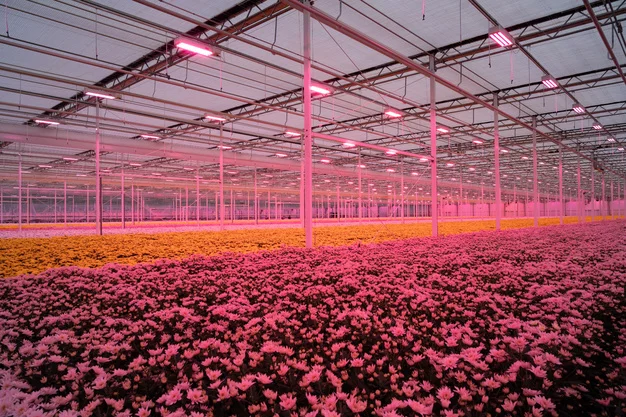
A good LED trial compartment is representative of your main production area, comparable to a control compartment, and large enough to produce reliable data. It should share the same crop, variety, planting date, climate system, and crop management as the reference compartment, so lighting is the only meaningful variable.
Key design requirements include:
- Comparable reference: Choose a control compartment with the same orientation, glass type, heating, and irrigation strategy.
- Representative size: Edge effects distort results in very small areas. Aim for a compartment large enough that border rows can be excluded from measurements.
- Crop-specific configuration: Light intensity, spectrum, and distribution should match the crop and cultivation strategy. A tomato setup with top lighting or interlighting differs from one for lettuce or cucumber.
- Consistent management: The same grower team should apply the same climate and fertigation approach in both compartments.
Document everything before planting: setpoints, dimming strategies, and the light plan. Without a clear baseline, results become difficult to interpret later.
Which results should be measured during an LED trial?
The most important results to measure are yield, crop quality, energy consumption, and labor impact, all compared against the control compartment. Together they show whether the lighting delivers more marketable product per kilowatt-hour and per square meter.
Track these categories consistently from day one:
- Yield: Weekly harvested weight or stem count per square meter, split into marketable and non-marketable fractions.
- Quality: Fruit weight, firmness, color, Brix, shelf life, or head weight and uniformity for lettuce.
- Energy use: Electricity for lighting, plus changes in heating demand, since LED fixtures emit less radiant heat than HPS.
- Crop development: Plant balance, truss development, leaf temperature, and vegetative versus generative steering.
- Operational factors: Labor hours, disease pressure, and crop management effort.
Measure energy at compartment level with sub-meters. Estimates from specification sheets are not a substitute for logged data.
How long should an LED trial run to be reliable?
An LED trial should run for at least one full cropping cycle, and ideally through the lowest-light period of the season. Shorter trials capture only a snapshot and can overstate or understate the benefit, because crop response and energy costs change with daylight, temperature, and plant age.
For long-cycle crops such as tomato and cucumber, covering the period from planting through peak production gives the clearest view. For lettuce, several consecutive cycles are more informative than one. Seasonal context matters too. A trial running only in spring tells you little about performance in a Scandinavian or Canadian winter, when supplemental light carries the greatest share of crop growth.
If a full-season trial is not feasible, plan a minimum of one complete cycle and treat the findings as directional until a second period confirms them.
How do trial results translate into a full-scale business case?
Trial results translate into a business case by converting measured differences in yield, quality, and energy use into financial terms, then scaling them to the full greenhouse area. The outcome is a payback period and return on investment based on your own data instead of generic assumptions.
Follow a structured approach:
- Quantify the gain: Multiply the yield and quality improvement by your actual selling prices and contract terms.
- Quantify the savings: Calculate the change in electricity cost per square meter, adjusted for your local tariff structure and peak or off-peak pricing.
- Account for costs: Include fixtures, installation, electrical upgrades, grid connection capacity, and maintenance.
- Add incentives: Factor in relevant energy-efficiency subsidies or tax schemes available in your region.
- Run scenarios: Test conservative, expected, and optimistic cases, so the decision holds up if prices or energy costs shift.
Be cautious when extrapolating. A result from one compartment may not scale linearly across a site with different glass, orientation, or climate zones.
What risks can a single-compartment trial not reveal?
A single-compartment trial cannot fully reveal site-wide risks such as electrical grid capacity, variation between compartments, long-term fixture performance, and year-to-year differences in weather and market prices. It validates crop response, but it does not prove every operational condition across the whole greenhouse.
Consider these limitations:
- Infrastructure limits: A full rollout may require higher grid capacity, new transformers, or cabling upgrades that a trial never tested.
- Climate interaction: Replacing high-heat lamps affects the whole greenhouse heat balance, which a single compartment may mask.
- Seasonal variability: One season may not represent an unusually dull or sunny year.
- Long-term durability: Fixture lifetime, light output maintenance, and service needs only emerge over several years.
- Crop and variety differences: Results for one variety may not transfer to another.
Acknowledging these gaps in advance prevents overconfidence and helps you plan a phased rollout.
When is it time to scale from trial to full rollout?
It is time to scale when the trial shows consistent, measurable advantages over the control, the business case meets your return thresholds under conservative scenarios, and infrastructure and financing are confirmed. If results are positive but uncertain, a phased expansion is safer than a single large step.
Use a simple readiness check:
- Yield and quality improvements are repeatable across the trial period.
- Energy data confirm the expected efficiency at compartment level.
- The financial case holds with conservative price and energy assumptions.
- Grid capacity, installation timing, and crop schedules are aligned.
- Your team understands how to steer the crop under the new light strategy.
Many growers expand in stages, converting additional compartments each season while continuing to compare results. This keeps risk contained and allows the lighting strategy to be refined with each step.
How Dutch Lighting Innovations Helps with Validating an LED Investment
Dutch Lighting Innovations (DLI) is an independent Dutch specialist in horticultural LED lighting, working with commercial greenhouse growers to design trials that produce decisions you can trust. Our approach combines crop-specific lighting with practical cultivation expertise and continued involvement throughout the growing season.
Here is how we support a trial:
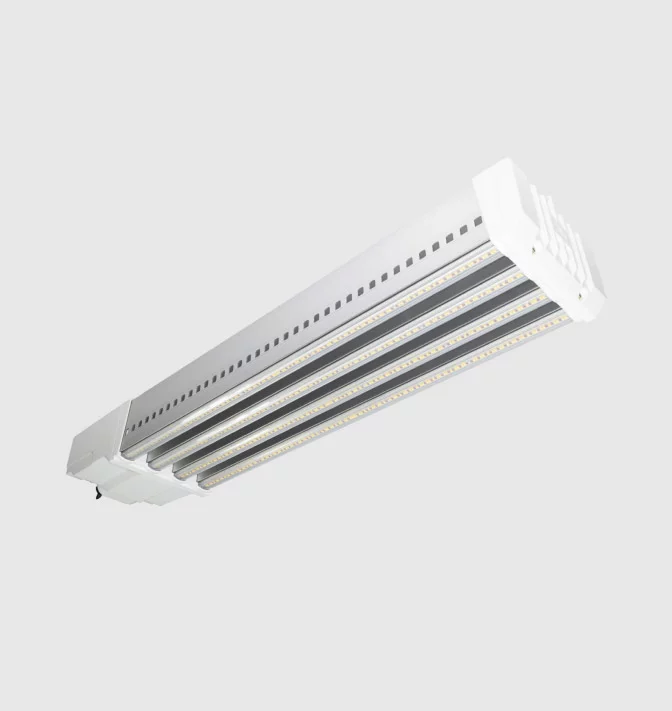
- Crop-specific light plans: Our LED lighting solutions are configured around your crop, cultivation strategy, and operational requirements, not a generic standard.
- Trial design support: We help define the compartment layout, control comparison, and measurement plan before installation.
- Season-long optimization: We stay involved during the cycle, reviewing performance and adjusting the light strategy with you.
- Direct, independent advice: You work with specialists who can make decisions quickly and tailor support to your situation.
- Proven practice: See how this works in practice in Project Red Harvest.
Planning an LED trial for tomato, cucumber, or lettuce? Contact our team to discuss your greenhouse and design a trial that gives you a clear basis for your next investment decision.