Access to higher-value seasonal markets improves the economics of supplemental lighting by letting growers sell more kilos during weeks when prices are highest, which shortens the payback period of an LED investment. The premium earned on winter and early spring production often outweighs added electricity costs, provided the light strategy matches the crop and the energy price. The sections below cover which price windows matter, how to calculate returns, and what can erode the premium.
Which seasonal price windows justify supplemental lighting costs?
The price windows that justify supplemental lighting are the low-supply weeks of late autumn, winter, and early spring, when natural light limits greenhouse output and market prices for tomatoes, cucumbers, and lettuce rise above summer levels. The longer and steeper that premium period, the stronger the case for investing in horticultural LED lighting.
Local market structure matters. In Canada, the northern United States, and Scandinavia, domestic field and greenhouse supply falls sharply in winter, and retailers rely heavily on imports. A grower who can deliver fresh, locally produced vegetables during those weeks often gains both a higher price and more stable contracts. In regions with milder winters and stronger import competition, the premium window is shorter and the case for lighting is weaker.
A practical test is to compare your average weekly price in the darkest months with your average price in peak summer. If the gap is wide and lasts for several months, supplemental lighting has a solid commercial foundation. If it is narrow or short, the investment needs a closer look at energy costs and crop choice.
How do you calculate lighting ROI against seasonal premiums?
To calculate greenhouse LED lighting ROI, subtract the added operating costs (electricity, maintenance, extra crop handling) from the added revenue (extra kilos multiplied by the seasonal price), then divide the total investment by the annual net gain. The result is your supplemental lighting payback period.
Work through these steps:
- Estimate the extra yield. Base this on the additional light sum delivered per square meter in the lit period, using crop-specific light response data rather than generic averages.
- Apply the right price. Use the actual weekly prices for the weeks in which the extra production is harvested, not an annual average. This is where seasonal premiums make the difference.
- Calculate energy cost per kilo. Divide the electricity cost of the lighting hours by the extra kilos produced. This shows whether each additional kilo still earns a margin.
- Add other costs. Include maintenance, labor for additional harvesting and packing, and any change in heating demand, since LED fixtures release less radiant heat than older lamps.
- Divide investment by annual net gain. This gives the payback period in years.
Run the calculation with conservative and optimistic price scenarios. A project that only pays back under the best price assumption carries more risk than one that holds up under cautious numbers.
How do energy costs change the premium-market equation?
Energy costs set the ceiling on how much of the seasonal premium a grower keeps. Every kilo produced under lights carries an electricity cost, so when power prices rise, the margin on winter production narrows. The premium justifies lighting only when the selling price clearly exceeds the energy cost per kilo plus other variable costs.
Two levers help. The first is efficiency: modern LED technology converts more electricity into usable light, lowering the energy needed per unit of light sum. The second is timing and control. Dimming, scheduling lighting outside peak tariff hours, and using natural light first all reduce the cost of each lit hour. Growers with flexible energy contracts can shift lighting toward cheaper periods without sacrificing the crop’s daily light requirement.
Because energy prices differ widely between the Netherlands, Canada, the United States, and Scandinavia, the same lighting plan can show very different returns by country. Local tariffs, grid fees, and any available incentives should be part of every business case.
Does a longer production window raise lighting profitability?
Yes. A longer production window raises lighting profitability because it spreads fixed investment costs over more harvest weeks and captures more high-priced weeks. Year-round greenhouse production also supports continuity with retail customers, which can lead to more stable pricing and stronger commercial relationships.
The benefit comes from two directions. First, lighting can bring the start of the season forward, allowing earlier planting and an earlier first harvest when prices are still high. Second, it can extend the end of the season and fill the winter gap that would otherwise be left empty. For crops such as tomato and cucumber, this can turn a seasonal operation into a near-continuous one.
The gain is not automatic. A longer window only improves returns if labor, climate control, and crop health can be maintained throughout. Plan the extended season as a whole, not as a simple addition of lamps to an existing cropping schedule.
What does crop-specific light strategy add to market returns?
A crop-specific light strategy increases market returns by matching light intensity, spectrum, and timing to the needs of each crop, so every unit of electricity produces more saleable yield and better quality. Generic lighting spends energy where the plant cannot use it, while tailored lighting directs it where it pays off.
Tomato, cucumber, and lettuce respond differently. Fruiting crops such as tomato and cucumber need high light sums over long cropping cycles and benefit from careful distribution within the canopy. Lettuce works with shorter cycles and lower intensities, so the economics depend on rapid turnover and consistent quality. Light placement (top lighting, inter-lighting, or a combination) also changes how much of the light reaches productive leaves.
Quality counts as much as quantity. Uniform size, firmness, color, and shelf life can secure better prices in premium channels. When lighting supports consistent quality in the high-price weeks, the premium is easier to capture and defend.
What risks can erode the premium from seasonal markets?
The main risks that erode the seasonal premium are falling market prices, rising energy costs, crop underperformance, and competition from imports or other lit greenhouses. Any of these can shrink the gap between selling price and cost per kilo, lengthening the payback period.
Consider each risk in turn:
- Market saturation. If many growers invest in lighting, winter supply rises and the premium narrows. Early movers benefit most.
- Energy price volatility. Unhedged power costs can turn a profitable winter week into a loss-making one.
- Agronomic issues. Disease, poor climate control, or an unsuitable light recipe can reduce the extra yield the business case relies on.
- Contract and demand shifts. Changes in retailer sourcing policies can alter which volumes earn a premium.
Stress test the business case against a lower price, a higher energy cost, and a lower yield response at the same time. If the project still pays back within an acceptable period, the investment is robust.
How Dutch Lighting Innovations Helps with Supplemental Lighting Economics
Dutch Lighting Innovations (DLI) is an independent Dutch specialist in LED lighting for professional horticulture. We help commercial greenhouse growers turn seasonal market opportunities into measurable returns through lighting designed around the crop, the cultivation strategy, and the energy situation of each business.
- Tailored lighting solutions: crop-specific configurations built around your operational requirements, rather than a one-size-fits-all fixture layout.
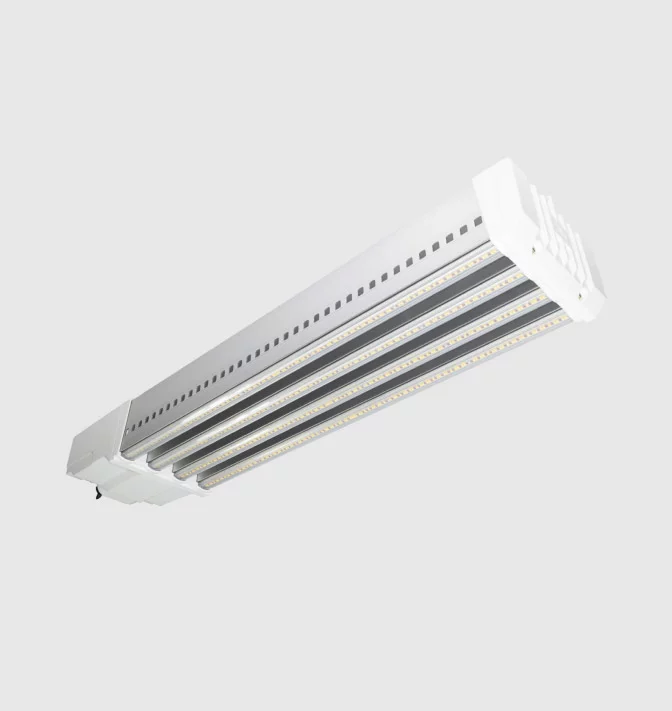
- Energy-efficient LED technology: designed to lower energy cost per kilo and support productive, sustainable cultivation. Explore our LED lighting products.
- Practical business case support: help with estimating light sum, yield response, and payback against your own seasonal price windows.
- Long-term partnership: continued involvement and optimization throughout the growing season, not only at installation.
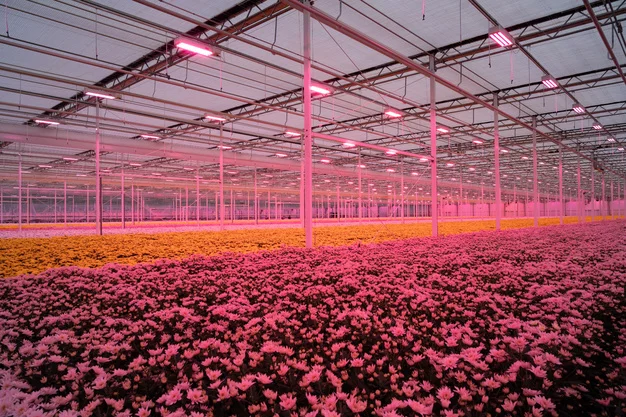
- Proven in practice: see how lighting performs in a real cultivation setting in our Red Harvest project.
Want to know what supplemental lighting could return in your own greenhouse? Contact our team to discuss your crop, your market window, and your energy costs, and we will help you build a clear, realistic business case.