Daylight-responsive dimming lowers a greenhouse lighting budget mainly by cutting kilowatt-hours and peak demand charges, because LED fixtures automatically reduce output when sunlight supplies part of the required light. The savings are offset by upfront costs for sensors, controls, and commissioning, so the net effect depends on crop, climate, and electricity tariff structure.
For tomato, cucumber, and lettuce growers in Canada, the US, and Scandinavia, where winter light is limited but spring and autumn days vary widely, dimming turns lighting from a fixed cost into a controllable one. The sections below show which cost lines change, what the setup costs, and how to verify the results.
Which cost lines does dimming actually change?
Daylight-responsive dimming primarily changes electricity consumption and peak demand charges. Secondary effects include fixture heat output, cooling or heating loads, maintenance intervals, and capital costs for controls. Labor and crop inputs are not directly affected, although crop outcomes can influence revenue.
Here is how each cost line typically moves:
- Energy (kWh): Lower, because fixtures run below full output whenever natural light contributes.
- Peak demand charges: Potentially lower, since dimming flattens the load profile, especially when combined with staged control or demand limiting.
- Heating and cooling: Mixed. Less lamp heat can raise heating needs on cold days, while reduced heat load may help during warm, bright periods.
- Capital expenditure: Higher, due to sensors, controllers, and integration work.
- Maintenance: Slightly more attention to sensor cleaning and calibration, balanced by fewer fixture operating hours at full power.
Because the lighting budget interacts with the climate budget, growers should evaluate dimming as a whole-greenhouse decision rather than a lighting-only line item.
How does daylight-responsive dimming reduce electricity use?
Daylight-responsive dimming reduces electricity use by measuring incoming sunlight with light sensors and lowering LED output so that total light at crop level stays at the target. Since LED power draw falls roughly in line with output, every hour of useful sunlight directly replaces purchased electricity.
The mechanism works in three steps. Sensors above the canopy or outside the greenhouse measure light intensity. The climate or lighting controller compares that reading with the crop’s target, often expressed as a daily light integral (DLI). It then dims fixtures to fill only the gap. On a bright February afternoon the lights may run at a fraction of capacity, while on a dark morning they run at full power.
Savings vary with several factors:
- Light levels and cloud patterns: Variable climates such as the Dutch coast or the Canadian Prairies offer more dimming opportunities than consistently overcast northern winters.
- Greenhouse transmission: Clean glass, good coatings, and low structural shading increase the share of natural light that counts.
- Crop target: Crops with a high DLI requirement, such as tomato and cucumber, leave less room for dimming than lettuce, which needs less supplemental light.
- Tariff structure: Time-of-use rates and demand charges raise the value of each avoided kilowatt-hour.
Research and industry experience both indicate that continuous dimming outperforms simple on/off switching because it avoids overshooting the light target. Smooth control also reduces the abrupt load changes that trigger demand peaks.
What upfront costs does a dimming setup add?
A dimming setup adds costs for dimmable LED drivers, light sensors, controllers or climate computer integration, wiring, and commissioning. Existing dimmable fixtures reduce the investment considerably, while retrofitting non-dimmable lighting can make the project far more expensive than a new, control-ready installation.
Typical cost components include:
- Dimmable fixtures or drivers: Often a small premium on new LED systems, but a major cost when retrofitting.
- Light sensors: Both inside and outside sensors improve accuracy, and multiple sensors help in larger compartments.
- Control hardware and software: Dedicated lighting controllers or integration with the existing climate computer.
- Installation and commissioning: Wiring, setpoint programming, and calibration against crop targets.
- Training and support: Time for the grower team to learn the strategy and adjust it through the season.
Quotes should state clearly what is included. Compartment layout, number of control zones, and crop plans all influence the final figure, so any estimate without a site review should be treated as indicative only.
How long does it take to earn back the dimming investment?
Payback time depends on how much electricity the dimming strategy avoids and what each kilowatt-hour and each kilowatt of peak demand costs. Greenhouses with high energy prices, demand charges, and variable sunlight typically recover the investment faster than sites with cheap power and stable, dark winters.
A practical way to estimate payback is to build a simple model:
- Establish baseline lighting energy use and cost per season from utility bills or submetering.
- Estimate the share of lighting hours that sunlight can partly replace, using historical light data for the location.
- Apply your actual tariff, including time-of-use rates and demand charges.
- Subtract added operating costs, such as extra heating if lamp heat decreases.
- Divide the total dimming investment by the net annual saving.
Avoid relying on generic percentages. Greenhouse geometry, crop schedule, and region produce very different outcomes, and a conservative scenario alongside an optimistic one gives a more reliable decision range. Where dimming is built into a new lighting installation, the incremental investment is smaller and the payback logic is correspondingly easier to satisfy.
Can dimming hurt crop results or hidden budgets?
Dimming can hurt crop results if the control strategy lets total light fall below what the crop needs, or if poor sensor placement causes inaccurate readings. Used correctly, with targets based on crop requirements, dimming maintains the light level while saving energy. Hidden budget risks come mainly from calibration drift and unplanned maintenance.
Watch for these pitfalls:
- Under-lighting: Setpoints that favor savings over crop requirements can reduce yield or delay development, costing more than the electricity saved.
- Sensor errors: Dirty, shaded, or misplaced sensors send false signals and cause the system to dim too much or too little.
- Heat balance: Reduced lamp heat can raise heating demand in cold spells, especially in Scandinavian and Canadian winters.
- Unequal light distribution: Dimming should not create uneven light across the canopy, which can lead to inconsistent crop quality.
- Control complexity: Poorly integrated systems can create conflicts between lighting and climate control, adding troubleshooting time.
The safeguard is simple: set the strategy around the crop’s light requirement first and the savings goal second, then review canopy conditions regularly during the season.
How should growers track dimming savings over time?
Growers should track dimming savings by comparing measured lighting energy use and cost against a documented baseline, normalized for weather and crop schedule. Submetering lighting circuits, logging sensor data, and reviewing results monthly give the clearest picture of what the dimming strategy actually delivers.
A reliable tracking routine includes:
- Submetering: Measure lighting energy separately from heating, pumps, and other loads.
- Light data logging: Record natural light and total light at crop level, so energy figures can be linked to actual sunlight.
- Normalization: Compare similar periods or adjust for differences in outside light, since a bright month will always use less energy than a dark one.
- Demand tracking: Review peak kW readings from the utility bill, not just total kWh.
- Crop KPIs: Record yield, quality, and development speed alongside energy data to confirm that savings did not come at the crop’s expense.
Reviewing these indicators at the end of each season allows setpoints and sensor placement to be refined, which is where much of the long-term value of daylight integration comes from.
How Dutch Lighting Innovations Helps with Daylight-Responsive Dimming
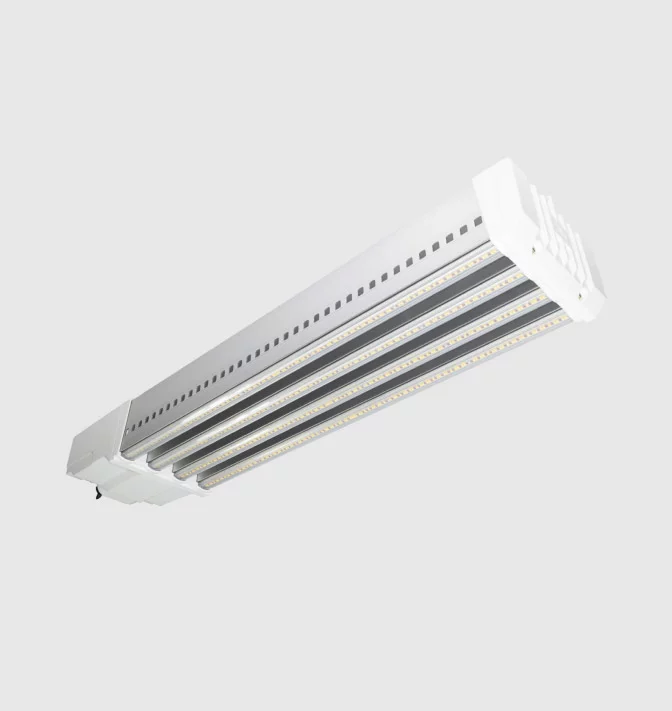
Dutch Lighting Innovations (DLI) is an independent Dutch specialist in LED lighting for professional horticulture. We design lighting around the crop and the cultivation strategy, so dimming supports the light target instead of undermining it. Our product range is built for efficient, controllable operation in commercial greenhouses.
Here is what that means in practice:
- Crop-specific configurations: Our tailored lighting solutions are designed around operational requirements, including crop type, light targets, and greenhouse layout.
- Energy-efficient LED technology: High-efficiency fixtures that support lower energy use per unit of light delivered.
- Direct, personal support: Short communication lines with experts who understand cultivation and control strategy.
- Season-long involvement: We stay involved after installation to help optimize performance as conditions change.
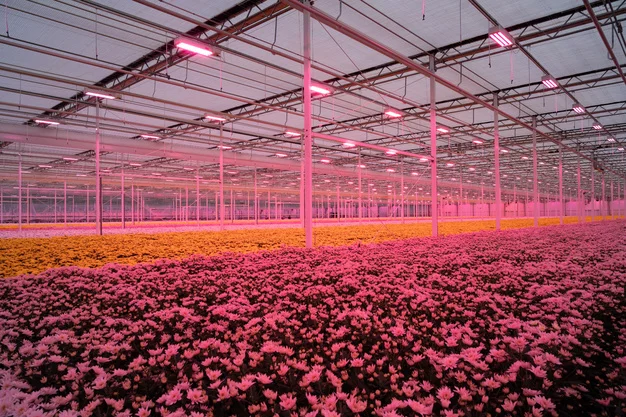
- Proven in practice: See what a real grower approach looks like in Project Red Harvest 2.
Planning a new installation or reviewing your current lighting budget? Contact our team to discuss how daylight-responsive dimming can fit your crop, climate, and energy tariff.