Limited electrical capacity raises the cost per installed light, because every kilowatt of grid connection becomes a scarce resource that expansion must justify. When capacity is capped, growers either pay for a grid upgrade, install more efficient horticultural LED lighting, manage peak load, or phase the rollout. The cheapest route is usually a combination of these.
For commercial greenhouse growers dealing with grid congestion, the economics of a lighting expansion now depend as much on available megawatts as on the crop plan. The questions below explain how to evaluate each lever.
How much does a grid connection upgrade add to expansion costs?
A grid connection upgrade can add a significant share to the total investment of a greenhouse lighting expansion, and in congested regions it can also add years of waiting time. The exact cost depends on the network operator’s tariff structure, the required voltage level, and the distance to the nearest available substation.
Direct costs typically include a one-off connection fee, new transformers or cabling on the grower’s side, and higher fixed monthly capacity charges. The less visible cost is delay. In areas with grid congestion, a grower may wait for a new connection while the crop plan, contracts, and market window pass by. Lost production during that wait belongs in the business case as a real expense.
Because of this, the grid connection should be treated as part of the lighting project budget, not as a separate line item. Dividing the upgrade cost by the extra hectares or square meters it enables shows the true infrastructure burden per unit of lit area. Compare that figure with what the same investment would achieve if spent on efficiency or load management instead.
How does LED efficacy change the economics when capacity is capped?
Higher LED efficacy means more photosynthetically active light for every kilowatt connected, so a fixed grid capacity supports more effective lighting. When capacity is the bottleneck, efficacy (measured in micromoles of light per joule) matters more than purchase price per fixture, because it determines how much crop performance each connected kilowatt can deliver.
Consider two options on the same capped connection. A higher-efficacy fixture delivers the target light level using fewer kilowatts, which either frees capacity for additional area or avoids an upgrade altogether. A cheaper, less efficient fixture may look attractive on the quotation but consumes the available capacity faster and leaves less room to grow.
Spectrum and distribution also play a role. Crop-specific light recipes for tomato, cucumber, and lettuce can deliver the needed growth response without wasting power on light the plant cannot use well. Uniform light distribution further reduces the need to overdesign for dark spots. Efficacy should therefore be assessed at system level, including the light the crop actually receives, not only at the fixture datasheet level.
Can dimming and peak load management stretch available capacity?
Yes. Dimming and peak load management can stretch a limited grid connection by keeping total simultaneous demand below the contracted maximum, allowing more installed lighting capacity than the connection would otherwise permit. The principle is simple: lighting rarely needs to run at full power across all compartments at the same moment.
Practical tactics include:
- Staggered switching: Start compartments in sequence rather than all at once to avoid demand spikes.
- Dynamic dimming: Reduce output when natural light is strong, so supplemental light fills only the gap to the daily light target.
- Load prioritization: Give priority to crops or growth stages with the highest light sensitivity when total demand approaches the cap.
- Time shifting: Move lighting hours toward periods with lower grid tariffs or lower congestion, where the crop’s photoperiod allows it.
Peak load management also protects against penalty charges that can apply when the contracted capacity is exceeded. Controls that integrate lighting with climate and energy data give growers the most room to maneuver, particularly in northern regions such as Scandinavia and Canada where winter lighting demand is highest.
Is a phased lighting expansion more cost-effective than a full rollout?
A phased expansion is often more cost-effective when electrical capacity is limited, because it spreads investment over time, matches lighting growth to available grid capacity, and lets growers validate returns before committing fully. A full rollout makes sense mainly when the grid connection already covers the final load.
Phasing offers three economic advantages. First, it reduces upfront capital and the financing cost that comes with it. Second, it allows the grower to measure actual yield and energy results in the first compartments and adjust the design for later phases. Third, it can align each phase with a grid capacity release or planned upgrade, so no capacity sits unused and no lights wait without power.
The trade-offs are real. Phased projects can mean higher installation costs per unit due to repeated mobilization, and lights bought at different times may be of different technology generations. A sound phasing plan fixes the final layout, controls architecture, and electrical design from the start, so that each phase slots into a coherent whole.
What alternatives to a bigger grid connection are worth evaluating?
The most practical alternatives to a larger grid connection are on-site generation, energy storage, and flexible capacity agreements with the network operator. Each can raise the effective power available to the lighting system without waiting for new grid infrastructure, though each has its own cost and complexity.
On-site generation and storage
Combined heat and power units, solar panels, and batteries can supply part of the lighting load locally. Batteries in particular can cover short demand peaks, reducing the contracted capacity needed. The business case depends on local energy prices, available subsidies, and how well the generation profile matches the lighting schedule.
Flexible and shared capacity arrangements
Some network operators offer time-dependent or non-firm connection contracts, which allow more capacity at times of low network stress in exchange for curtailment at peak times. Growers in clusters can also explore shared connections or local energy cooperatives. These options suit growers whose crop schedule tolerates some flexibility and who have strong load control in place.
How should growers calculate the return on expansion under capacity limits?
Growers should calculate return by comparing the extra margin from added lit area against the full cost of making that area possible, including fixtures, installation, controls, grid costs, and energy. The key adjustment under capacity limits is to include the cost of each scarce kilowatt, not just the cost per fixture.
A practical approach follows these steps:
- Define the target: Set the extra yield, quality premium, or longer production season that the added lighting should deliver for the specific crop.
- Calculate total investment: Add fixtures, installation, controls, any grid or on-site power investment, and financing costs.
- Estimate annual operating cost: Include electricity at realistic tariffs, capacity charges, and maintenance.
- Compare scenarios: Model the options side by side: grid upgrade, higher efficacy, load management, phased rollout, and combinations.
- Stress test: Vary energy prices, crop prices, and delays in grid capacity to see which scenario holds up.
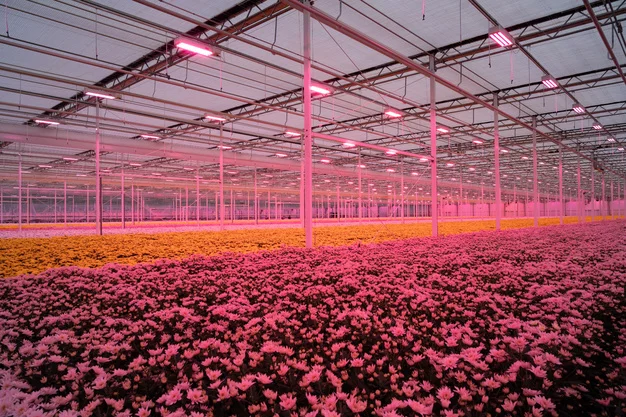
The best scenario is rarely the one with the lowest investment. It is the one that produces the highest return per available kilowatt over the lifetime of the installation. Using conservative yield assumptions and validating them with real crop data from comparable projects keeps the calculation credible. A real-world example is the Red Harvest project, which shows how a lighting design can be built around a specific crop and its operational requirements.
How Dutch Lighting Innovations Helps with Limited Electrical Capacity
Dutch Lighting Innovations (DLI) is an independent Dutch specialist in horticultural LED lighting for professional greenhouse growers. Our tailored lighting solutions are designed around your crop, your cultivation strategy, and the electrical limits of your site, so every available kilowatt works as hard as possible.
Here is how we support growers working with a capped connection:
- Crop-specific light design: Lighting configurations for tomato, cucumber, lettuce, and other crops that deliver the target light level with the lowest possible power demand.
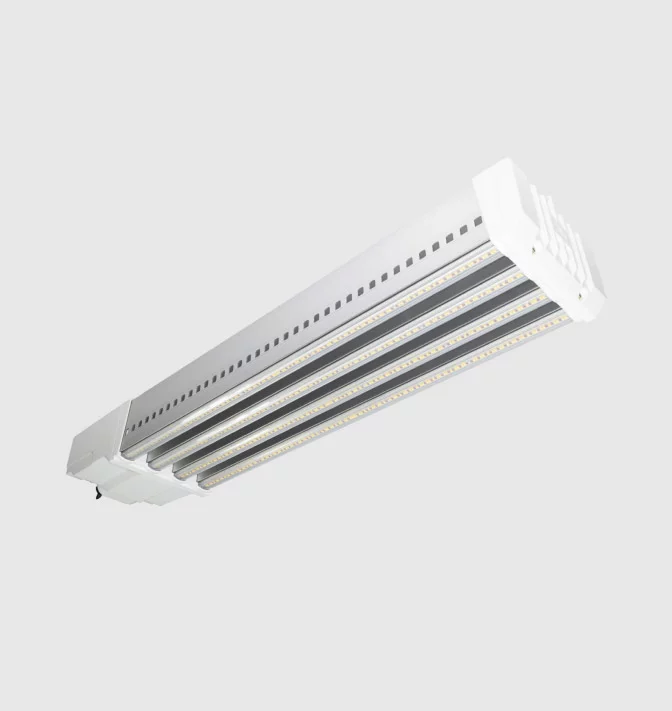
- High-efficacy LED technology: Fixtures from our product range that maximize light output per connected kilowatt.
- Capacity-aware planning: Layouts and control strategies that support dimming, staggered switching, and peak load management within your contracted capacity.
- Phased expansion support: Designs that grow with your grid connection, so each phase fits the final system.
- Long-term partnership: Continuous involvement and performance optimization throughout the growing season, with direct communication and flexible decision-making.
Planning an expansion on a limited grid connection? Contact our team to discuss your site, your crop, and the most profitable way to add lighting within your available capacity.