Growers should budget for a lighting project by building the plan on a no-incentive baseline, then treating any confirmed funding as upside rather than a requirement. Model at least three scenarios, secure financing that does not depend on approval, and hold a contingency reserve for installation and electrical costs.
This approach protects the investment decision from the timing and uncertainty of subsidy schemes, which is especially relevant for tomato, cucumber, and lettuce growers in Canada, the US, and Scandinavia, where programs and utility rebates vary by region and funding round. The sections below cover the questions growers ask most when planning a greenhouse LED lighting budget under incentive uncertainty.
Which budget scenarios should growers model before funding is confirmed?
Growers should model three scenarios: no incentive, partial incentive, and full incentive. The no-incentive case is the baseline that must still make financial sense. The other two show how much faster the payback becomes if funding is approved, without making the project depend on it.
Build each scenario on the same foundation: fixture and installation costs, electrical upgrades, controls, expected energy consumption, and the yield or quality effect you reasonably expect for your crop. Then vary only the funding assumption. This keeps the comparison honest and shows exactly what the incentive is worth to your business.
Two further sensitivities are worth adding. First, test a higher electricity price, because energy cost is the largest driver of running expenses for assimilation lighting. Second, test a delay scenario in which funding is confirmed after your preferred installation window. For a fruiting vegetable crop, missing the start of a winter lighting season can cost more than a subsidy is worth.
How can a lighting project be financed without relying on incentives?
A lighting project can be financed through equipment loans, leasing, supplier payment plans, or internal cash flow, all of which proceed independently of incentive approval. The right choice depends on your balance sheet, your tax position, and whether you prefer to own the assets or pay for them over time.
The most common grower lighting financing options include:
- Bank or agricultural lender loans: Secured against the equipment or the business, with repayment structured around seasonal cash flow.
- Leasing: Spreads cost over the contract term and can keep capital free for other investments.
- Staged supplier terms: Payment milestones tied to delivery and commissioning rather than a single upfront sum.
- Retained earnings: Suitable for smaller or phased installations that do not strain working capital.
Whichever route you choose, size the repayment against the no-incentive scenario. If the monthly cost is covered by expected energy savings and crop gains without any subsidy, the financing is robust. Any later incentive then shortens the repayment or reduces the amount borrowed.
Should a lighting installation be phased while funding is pending?
Yes, phasing is often the most practical way to keep a project moving while funding is pending. Installing lighting compartment by compartment limits upfront capital, lets you validate performance on a real crop, and keeps later phases available for incentive support if it is approved.
A sensible phasing plan starts with the compartment where lighting delivers the clearest return, for example a section with a high-value, long-season crop. Use the first phase to confirm real-world energy use, light distribution, and crop response. Those measured results make the business case for the remaining phases more reliable than any projection.
Phasing does have trade-offs. Electrical infrastructure, such as transformers and cabling, is usually sized for the whole project, so upgrading it in stages can raise total cost. Decide early whether to build the full electrical capacity once and add fixtures later, or to scale the infrastructure alongside each phase. Control strategy and crop scheduling should also be designed for the final layout, so phases integrate cleanly rather than creating a patchwork.
Does starting the project before approval affect incentive eligibility?
In many incentive schemes, yes: starting a project or placing binding orders before approval can make the investment ineligible. Rules differ by program, country, and region, so growers should confirm the exact conditions in writing before signing contracts, ordering equipment, or beginning installation.
Typical points to check with the funding body include:
- Whether the application must be submitted and acknowledged before any order or contract is signed.
- What counts as the project start: a purchase order, a deposit, delivery, or the first installation work.
- Whether preparatory work, such as design, measurements, or quotations, is allowed before approval.
- Whether phased installations can be treated as separate projects with separate eligibility.
If the rules are strict and your timeline is tight, you face a real decision: wait for approval and risk missing the season, or proceed without funding and accept the full cost. Your no-incentive scenario should already tell you whether proceeding is viable. Where possible, ask suppliers for quotations and design work that carry no binding commitment, so you can prepare fully without jeopardizing eligibility.

What payback assumptions keep a lighting budget realistic?
Realistic payback assumptions rely on measured or conservative inputs: your actual electricity tariff, verified fixture efficiency, expected operating hours, and a cautious estimate of yield or quality gains. Avoid assuming best-case crop response, and never count incentive money in the baseline payback calculation.
Several assumptions deserve particular scrutiny in a greenhouse lighting ROI calculation:
- Energy price: Use your contracted rate plus a sensitivity for increases, and account for peak and off-peak differences if your tariff has them.
- Operating hours: Base them on your location and crop schedule. Light needs differ considerably between a Canadian winter and a Scandinavian one.
- Crop response: Be conservative. Tomato, cucumber, and lettuce respond differently to light intensity, spectrum, and daylength, and gains depend on the cultivation strategy as a whole.
- Heat contribution: Efficient LED fixtures emit less radiant heat than older lamps, which can raise heating demand. Include this in the energy balance.
- Maintenance and lifetime: Include controls, cleaning, and expected service costs over the evaluation period.
Present payback as a range rather than a single number. A range communicates uncertainty honestly to lenders, partners, and your own management, and it makes energy-efficient horticultural lighting investments easier to compare against alternatives.
How should contingency be built into the budget?
Build contingency as a separate, explicit line in the budget rather than padding individual items. A reserve of roughly 10 to 15 percent of the installation cost is a common planning convention, adjusted upward when the electrical infrastructure is old or the scope is not yet fully defined.
Allocate the reserve across the risks most likely to appear:
- Electrical upgrades: Grid connection capacity, transformers, and cabling are frequent sources of unexpected cost.
- Structural and mounting work: Greenhouse structure limits can require reinforcement or alternative fixture placement.
- Controls and integration: Connecting lighting to the climate computer may need additional hardware or programming.
- Timing risk: Delays in delivery or funding decisions can shift installation outside the ideal window.
- Currency and component prices: Relevant for international projects where equipment is priced in a different currency.
Revisit the contingency at each phase. If a phase finishes under budget, you can release part of the reserve or carry it forward to the next stage. Keeping this discipline visible prevents the quiet erosion of margins that often follows an uncertain funding period.
How Dutch Lighting Innovations Helps with Lighting Budget Planning
Dutch Lighting Innovations (DLI) supports commercial greenhouse growers who need a lighting plan that holds up whether or not incentive funding arrives. As an independent Dutch specialist, DLI works directly with growers on crop-specific configurations rather than off-the-shelf packages.
- Crop-specific design: Lighting configurations built around your crop, cultivation strategy, and operational requirements through tailored LED lighting solutions.
- Efficiency-focused planning: Systems designed to support productive cultivation while keeping energy consumption in check, which strengthens the no-incentive payback case.
- Phased project support: Help structuring installations in stages, so capital and electrical investments stay aligned with your budget and funding timeline.
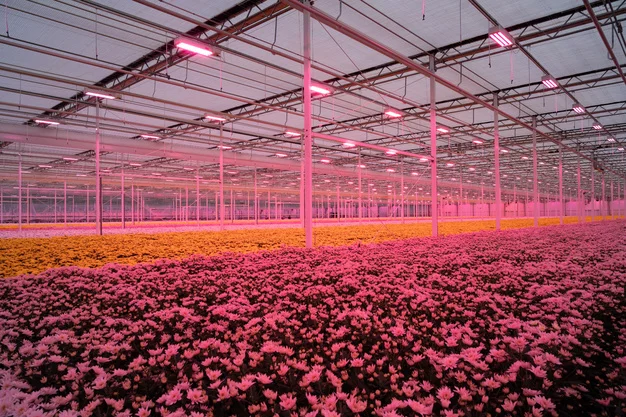
- Proven project experience: Practical insight drawn from real installations, such as Project Red Harvest.
- Long-term partnership: Continued involvement and performance optimization throughout the growing season, not just at delivery.
If you are planning a lighting investment and funding is still uncertain, contact the DLI team to discuss your crop, your timeline, and a budget scenario that works with or without incentives.